Website Search
Find information on spaces, staff, and services.
Find information on spaces, staff, and services.
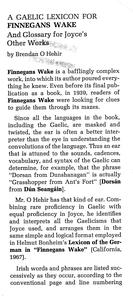
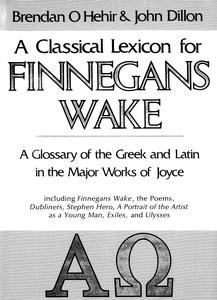
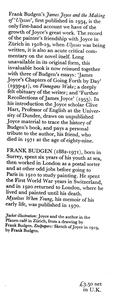
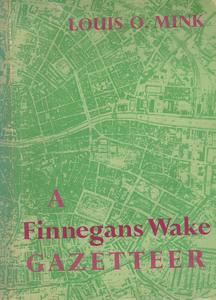
The selected works compiled in the James Joyce Scholars' Collection (JJSC) all share two characteristics: 1) all the books are currently out-of-print and 2) they are valuable, perhaps indispensable, to those who seek a more complete understanding and appreciation of the richness of James Joyce's literary works. It is hoped that the search features of the JJSC database will be a convenient aid to scholarship and study. Both the individual works and the collection can be browsed and searched by keyword. However, the underlying computer text used in the search process consists of unedited files created by using Optical Character Recognition (OCR) software. Consequently, the search capability is useful but not absolutely reliable in locating words and terms used in the texts. Users are advised to consult the table of contents and indexes in the individual books in order to conduct a thorough search for specific information in the texts.
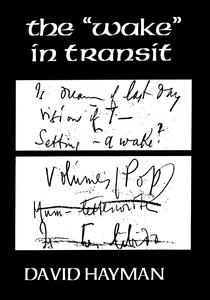
The UW-Madison Libraries developed this project in collaboration with Professor David Hayman, one of the pioneers of Joyce scholarship. David Hayman is Evjue-Bascom Professor Emeritus of Comparative Literature at the University of Wisconsin-Madison. He has been reading Joyce for fifty-odd years and publishing in the field for nearly as long. His first book, Joyce et Mallarmé, first appeared in print in 1958. Since then he has published widely on Finnegans Wake, Ulysses, Portrait, and the Dubliners, in that order. His work on Joyce has appeared in periodical articles as well as books, including James Joyce: Critical Essays (with Clive Hart), Ulysses: the Mechanics of Meaning, Guia del Ulisis, In the Wake of the Wake, Reforming the Narrative, The James Joyce Archive (ed. 36 volumes), The 'Wake' in Transit, Epiphanias, and Probes: Genetic Studies of Finnegans Wake (with Sam Slote).
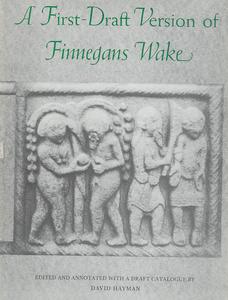
His book The First Draft Version of Finnegans Wake is one of the principal resources of the James Joyce Scholars' Collection. Reprint copies of The First Draft Version will be made available for purchase by the UW-Madison Libraries' Parallel Press.
A passion for understanding the creative process has been the sustaining force of David Hayman's intellectual life. The James Joyce Scholars' Collection is an example of his creative thinking and the project would not have been possible without his inspiration and leadership.








Portrait of James Joyce (1920s, Oil on Canvas)
Robert Motherwell Estate
© Dedalus foundation, Inc./Licensed by VAGA, New York, NY.
Reproduction of this image, including downloading, is prohibited without written authorization from:
VAGA
350 Fifth Avenue, Suite 2820
New York, NY 10118.
Tel: 212-736-6666; Fax: 212-736-6767;
email: info@vagarights.com
The James Joyce Scholars' Collection database is copyrighted by the Board of Regents of the University of Wisconsin System. All rights are reserved.
Copyrights for the individual works included in the Joyce Scholars' Collection are retained by the original publishers and, in some cases, by the authors and their heirs.
Portions of the database may be quoted or copied for personal research and teaching to the extent permitted by "Fair Use" as defined by copyright law. The James Joyce Scholars' Collection may be linked to by non-commercial, non-subscription Internet sites that have been created for educational purposes.
Copied!
