Please note that this collection of images, audio and text is now part of The State of Wisconsin Collection. It was formerly a separate collection titled The Belgian-American Research Collection.
| New! Explore the collection in a whole new way with Google Earth |
Using data from the Belgian-American Research Collection and the Google Earth tool, researchers are able to view the Belgian Survey Maps superimposed over a satellite image of the land itself. The locations of specific structures are marked with virtual thumbtacks. <More> |
|
Click on an image to browse the Belgian-American Research Collection by predefined subject grouping: |
||
![]() View all images |
![]() Architecture Survey |
![]() Immigration Histories |
![]() Oral History Recordings |
![]() Log Structures |
![]() Belgian Survey Maps |
Jump to: Collection Background | Scope and Content Note | Digital Collection | Technical Note
About the Collection
One of the country's largest concentrations of Walloon-speaking Belgians is found in northeastern Wisconsin, resulting in a unique cultural and social flavor. The largest wave of Belgian immigration to Wisconsin occurred in the mid-1850s. While the 1850 U.S. Census lists only 45 persons of Belgian nativity in the state, by 1860 the number had increased to 4,647. The 1890 U.S. census also shows that 81% of Belgians in the state lived in the northeastern counties of Brown, Kewaunee, and Door. The Belgian immigration into northeastern Wisconsin came to an abrupt halt in about 1858, when word reached the homeland of the physical and economic hardships and the cholera epidemic sweeping the settlement.
The first Belgian settlers made a living making shingles and farming small plots of land. This changed in the fall of 1871 when a major fire (the same that devastated Peshtigo on the same day as the great Chicago fire) swept through Belgian settlements and virtually destroyed the shingle industry. After the fire, farming became the major industry, but because the farms were small, income was often supplemented in the winter by commercial fishing. Some men also migrated to the lumber camps in northern Wisconsin at Thanksgiving time and returned home in April; during this period, the women and children assumed responsibility for feeding and caring for the livestock.
Barriers of language and rural poverty tended to isolate and insulate the Belgians from their neighbors. While Belgians from both the Flemish and Walloon provinces have settled in Northeastern Wisconsin, the Walloons have remained a more homogeneous, readily identifiable ethnic group. The Belgians in this area generally believe, erroneously, that Walloon is only an oral (not written) language, and because it has been passed down orally in this part of the country, it may be regarded as a folk language. Walloon is a French patois. French was used in church records, correspondence, mourning cards, etc.
Today, many Belgian descendents still reside in the 35 square mile area settled by their ancestors. In many cases, farms have been in the same family for over 100 years. Fourth and fifth generation Belgians still speak together in Walloon, and continue such customs as the celebration of Kermis (a harvest festival held in early fall) and the erection of a "maypole" in the yard of a winning political candidate. The presence of small wayside religious shrines also illustrates Belgian influence.
Collection Background
A pilot project was undertaken in 1975-1976 to establish a Belgian-American Ethnic Resource Collection in the Special Collections Department of the University of Wisconsin-Green Bay Cofrin Library. The objective was to record the undocumented historical, social, and cultural legacy of this unique ethnic group. Funding was provided by the American Revolution Bicentennial Administration, Wisconsin American Revolution Bicentennial Commission and the University of Wisconsin-Green Bay.
The guidelines for the project were as follows:
- Collect original documents reflecting the character of the Belgian Community, including legal papers, diaries, letters, papers of organizations, and local governmental records. Such materials would be organized by the Wisconsin State Historical Society.
- Visual material such as photographs were also collected.
- Record oral histories (on audio-tape when appropriate or in a written report). Document the Walloon language spoken in Brown, Door and Kewaunee Counties.
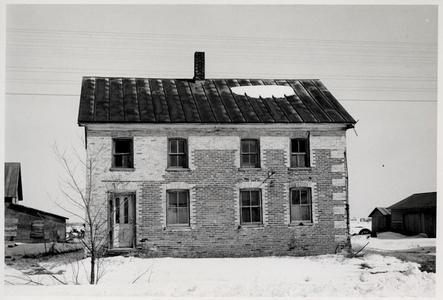
- Conduct an architectural survey to identify typical Belgian architecture including log, stone and brick houses, small chapels, outdoor ovens, and summer kitchens.
- Compile an annotated bibliography of resources, at the University of Wisconsin-Green Bay and elsewhere, relating to the Belgians of northeastern Wisconsin.
- Prepare traveling exhibits of material collected to be displayed in schools, libraries, and other public places.
The goals of the initial project were successfully met. Materials relevant to Belgian-Americans in northeastern Wisconsin are still collected.
Scope and Content Note
The resources of the collection focus on the rural Walloon settlement, with a limited amount of Flemish material available.
Oral history tapes and a few narratives on such subjects as folklore, fishing, customs, foods, occupations and the Walloon language have been collected. The tapes are abstracted and a subject index is available.
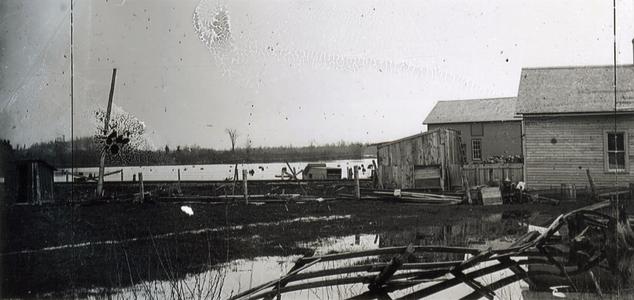
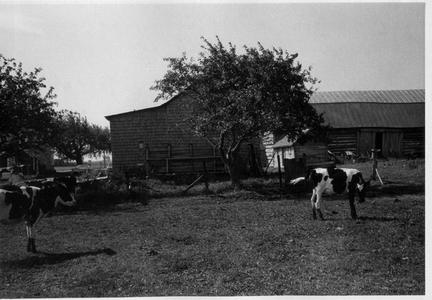
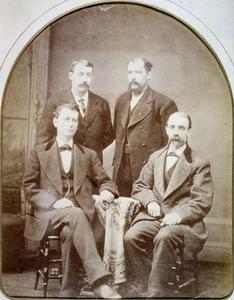
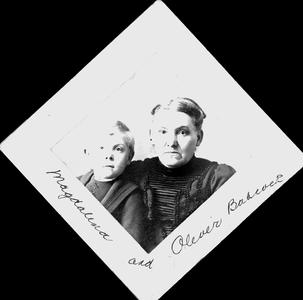
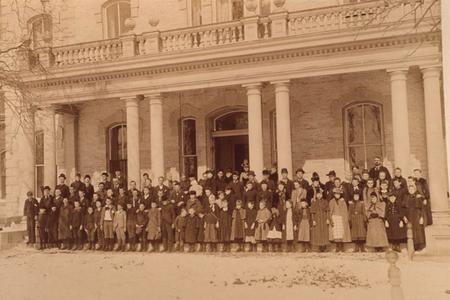
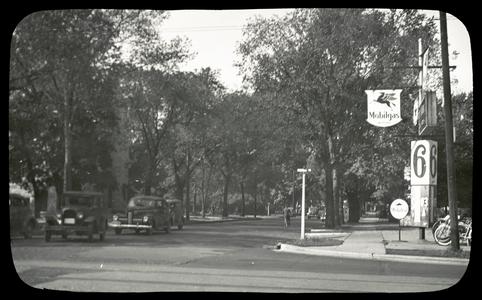
The iconography collection includes photographs from the past and the present, including documentation of the architecture of the Belgian community. Houses, barns, outdoor ovens, wayside shrines, and log buildings have been photographed and supporting information gathered. Additional photo topics include families, celebrations and communities.
Nine in-depth architectural surveys were conducted, which resulted in obtaining photographs of all the structures on the farms surveyed, as well as oral history interviews with the owners or previous owners. Maps were drawn to scale showing the location (both past and present) of structures, gardens, orchards fences, fields, driveways, etc. A more general survey of Belgian architecture was also conducted encompassing over 80 farms.
Documentation of the Walloon language is available through oral history tapes, dictionaries, grammars, lexicons and serials.
Manuscript materials and government records gathered by the project became the property of the Wisconsin Historical Society for permanent deposit in the Green Bay Area Research Center. Records of town governments in areas heavily populated by Belgians were especially collected. These included minutes of town board meetings, assessment rolls, chattel mortgage records, election records, and financial materials. Also acquired were collections of family papers, church records, and records from other organizations.
Digital Collection
In an effort to make this unique historical and cultural collection more accessible, a project was undertaken to digitize components of the materials. The photographs, oral history tapes and abstracts, and select publications from the Belgian American Resource Collection have been scanned. As time permits and technology changes, additional materials will be made available digitally.
Technical Note
Please note that full-text searching for the electronic-facsimile texts in our collections is based on uncorrected OCR (Optical Character Recognition) results. While such text is often highly accurate, it will contain errors that may affect your search results. In particular, texts with the following characteristics are particularly prone to error (in some cases, accuracy for such texts is so low that we have decided not to attempt to provide full-text searching):
- Hand-written texts;
- Texts that contain diacritics;
- Texts that contain non-Latin scripts;
- Texts that contain obsolete characters (including the "long S" [looks like an "f"]);
- Texts that are printed in a font in which the letters are difficult for the software to differentiate.