|
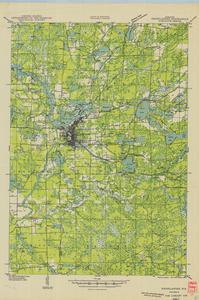
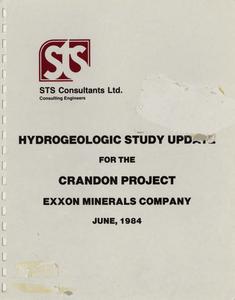
The Crandon Mine Reports provide researchers access to information about
the Crandon Mine permit process that occurred from between 1976, when
the Exxon Coal and Minerals Company discovered a zinc-copper ore body
located in northeastern Wisconsin near the city of Crandon, to 2003,
when the Nicolet Minerals Company withdrew its permit applications after
purchase of the project lands by the Mole Lake Sakaogon Chippewa and the
Forest County Potawatomi Tribes.
|
|
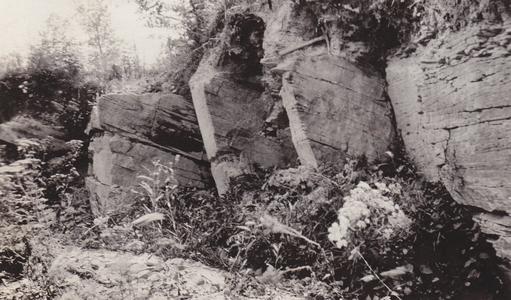
Geology and Natural Resources of Wisconsin consists of nine foundation volumes that provide detailed
documentation of mid- to late-19th century Wisconsin geological and natural history. Contents include government
reports and land surveys of Wisconsin and surrounding states, supplemented with numerous maps and illustrations.
Authors include renowned 19th-century state geologists and UW faculty and administration David Dale Owen (1807-1860),
James Hall (1811-1898), Josiah Dwight Whitney (1819-1896), Edward Daniels, and Thomas C. Chamberlain (1843-1928).
|
|
This series of reports is required by the specifications of the law of publication to embrace a general and systematic
presentation of the geological structure of the state and the history of its formation, together
with other matter whose preparation can only be advantageously completed after all special and detailed
investigations have been finished.
|
|
Leopold taught at the University of Wisconsin from 1933 until his
death in 1948, and the University of Wisconsin-Madison holds the largest
collection of Leopold materials in the country. The 190 images in
this collection are largely photographs illustrating his life with
some representative pages from his journals and other manuscript materials.
|
|
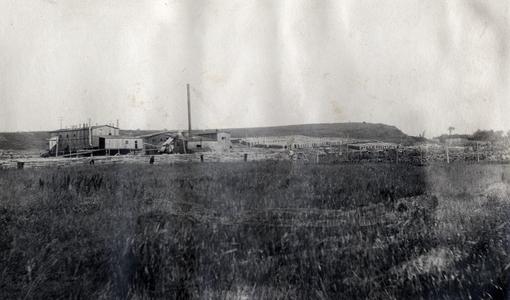
The Kennecott Flambeau Mine process documents provide researchers access to the documents that
relate to the permit process for the mine. Approximately 25 documents
describe the mine and its natural and cultural environments. The
documents contain numerous color maps, illustrations, and approx. 130
drawings from a series of original blueprints.
All the materials in this collection were made available to the citizens of Wisconsin at the Ladysmith Public
Library during the life of the mine. They were donated to the Kurt F. Wendt Library, University of
Wisconsin-Madison after the mine closed. Wendt Library holds the print copies.
This summary of the history of the mine and the permit process is based on the web site "Reclaimed Flambeau
Mine" by the Wisconsin Department of Natural Resources:
http://www.dnr.state.wi.us/org/aw/wm/mining/metallic/flambeau/index.htm
Beginning in 1974, Kennecott Minerals Company initiated the process to obtain a mining permit in accordance with the newly
adopted Metallic Mining Reclamation Act. The project as proposed in the mid-1970s involved
mining the ore body in two phases, an 11-year open pit phase followed by an 11-year underground mining operation.
Flambeau Mining Company, a subsidiary of Kennecott Minerals Company, formally restarted the permitting process for the
project in 1987, starting a three year process of baseline data gathering, negotiations with local communities, and
project design and review.
The Wisconsin Department of Natural Resources issued the Final Environmental Impact Statement for the project in
early 1990 and the permit hearing was held during the summer. The independent hearing examiner issued all necessary permits in January
1991 and construction of the project site began in July 1991.
Ore shipments from the site began in May 1993 and continued for just over 4 years. Backfilling of the pit took about
1.5 years and reclamation activities at the site were generally completed by the end of 1999.
The 181-acre mining site located about one mile south of Ladysmith, Wisconsin, is bounded on the east by State
Highway 27 and on the west by the Flambeau River.
The Flambeau deposit existed at very shallow depth. Depth to bedrock at the mining site ranged from about 15-40
feet. Glacial sand, gravel and till overlaid sporadically occurring Cambrian sandstone which in turn sat above
the weathered pre-Cambrian metamorphic rocks containing the Flambeau deposit.
Mining of this shallow ore body was accomplished through a 32-acre open pit. The pit trended in a northeast-southwest
direction and was 2,600 feet long, about 550 feet in width, and reached an ultimate depth of about 220 feet.
Over the course of the mining operation, about 1.9 million tons of ore containing about 8.9% copper and 0.10 ounces
of gold per ton were mined and shipped from the site. The mine produced about 178,000 tons of marketable copper and
328,000 ounces of gold.
The approved Reclamation Plan for the Flambeau Project specified that the open pit, upon completion of mining, would
be completely backfilled with original rock material that was separated from the ore (waste rock and glacial overburden).
Reclamation of the pit began in early 1997 and was completed in late 1998.
|
|
The Passenger Pigeon is the official scholarly publication of the
Wisconsin Society for Ornithology, an organization of both professional
and non-professional ornithologists dedicated to the study of Wisconsin
birds. First published in 1939, the quarterly journal features a wide
range of original information about Wisconsin birds and their habitats,
including seasonal field reports, results from annual Christmas bird
counts, descriptions of May and Big Day counts, and scientific research
articles. Contributions include reports from birders throughout the
state on ununsual and interesting sightings and historical accounts from
and about prominent Wisconsin naturalists. Editorial comments from
officers in the Wisconsin Society for Ornithology are provided regularly.
|
|
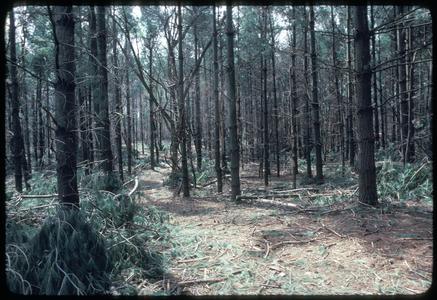
The Annual Conference On Ecosystems Restoration and Creation began in
1973 as a small regional conference targeted at the emerging art and
science community which was concerned with environmental restoration. It
began as part of a federally funded program administered by Hillsborough
Community College in Tampa, Florida. Its focus was centered primarily on
applied restoration and creation of coastal wetlands.
Beginning in 1979, the conference expanded its scope to include all
wetlands, not just coastal, and the name was changed to The Annual
Conference On Wetlands Restoration and Creation. Since that time,
interest in restoration increased world-wide to include total ecological
restoration. To address this increased interest in all areas of
ecological restoration, the conference name was again changed in 1995 to
The Annual Conference On Ecosystems Restoration and Creation.
The UW-Madison Libraries digital collections include the annual
conference proceedings from 1979 to date, but exclude the proceedings
from the 1st through 5th conferences when the focus was limited to
coastal wetlands. For more information, see The Annual Conference on Ecosystems Restoration and Creation page
on the Hillsborough Community College website.
|
|
First issued in 1970 as Symposium on Prairie and Prairie Restoration, the proceedings from these biennial conferences were
subsequently published as The Proceedings of the Midwest Prairie Conference (1972-1978) and most recently (1980-date)
under the title Proceedings of the North American Prairie Conference. From their inception, the prairie conferences
attracted faculty, students and hands-on practitioners engaged in basic research about prairies and their successful
management and restoration. Each volume is a collection of articles on topics ranging from prairie ecology and community
structure, plant and animal populations, species accounts, propagation, vegetational history, and management techniques.
|
Proceedings of PERCIS III, the Third International Percid Fish Symposium, University of Wisconsin, Madison, Wisconsin, U.S.A., July 20-24, 2003
http://digital.library.wisc.edu/1711.dl/EcoNatRes.Percis
Percis III was held July 20-24, 2003, at the Monona Terrace Convention Center
in Madison, WI, USA. Percis III was the successor to two previous symposia, Percis I in Ontario,
Canada in 1976, and Percis II in Vaasa, Finland, in 1995. Percis III was an unqualified success: the symposium included
more than 180 presentations, given by over 150 registered participants from 30 countries around the world.
Percis III was divided into 6 thematic areas: ecology, management, aquaculture, general biology, yellow
perch in the Great lakes, and ecology and evolution of darters.
|
|
The Research Report series was started in 1960. Typically, reports that get published as Research
Reports are narrower in scope than Technical Bulletins. They primarily report on a single topic,
selected aspects of a more complex study, or interim results of long research studies.
The series appeals to a state and regional audience, primarily resource managers. Research Report manuscripts
are peer-reviewed by DNR scientists and managers, and occasionally outside reviewers.
|
|
The Technical Bulletins series was started in 1950 and was originally titled Technical Wildlife Bulletins. In 1958,
the series changed its name to the current title (Technical Bulletins) and was modified to include technical reports
on game, fish, and forestry subjects. Typically, reports that get published as Technical Bulletins are monograph-style
publications that report on complete studies or complete portions of studies that involve major implications for
change in management or policy. The Technical Bulletin series appeals to a national/international readership,
including department managers and administrators and the scientific community at large. Technical Bulletin manuscripts
are peer-reviewed by experts within and outside the department.
|
|
Silver occurs naturally in the environment, but it is also used in various businesses and industries, particularly
photofinishing. There has long been concern about the effects of silver on aquatic organisms. Over the past decade,
significant advances have been made in the understanding of the environmental chemistry, toxicology, and biological
behavior of silver. The most recent findings promise to revolutionize scientific thinking not only with regard to
silver behavior, but for other metals in the environment as well. The scientific community has learned much new
information about sources, concentration levels in natural waters and biota, physico-chemical forms, adsorption
and desorption reactions, toxicology, bioaccumulation, influence of ligands, and transport and fate characteristics
of silver. The research findings have been made public through individually published peer-reviewed papers and the
proceedings of the international Argentum conferences.
UW Sea Grant Institute sponsored six
international conferences on the "Transport, Fate, and Effects of Silver in the Environment", better known as Argentum
I-VI. From 1993-1998, the conferences were held in Madison, Wisconsin; Washington, D.C.; and Hamilton, Ontario,
Canada. The proceedings of the first five conferences were published by UW Sea Grant and are reproduced here.
SETAC (Society of Environmental Toxicology and Chemistry) Press published the proceedings for the sixth conference.
|
|
Dr. Virginia E. (March) Kline (1926-2003) was a plant ecologist with a thirst for knowledge about the natural
world. She enthusiastically taught the wonders of nature and the science of ecology to students of all ages.
In her role as the University of Wisconsin Arboretum Ecologist and Research Program Manager (1975-1996),
she helped to develop the new field of restoration ecology. She lectured and consulted around the world in the field
of restoration ecology and received many awards for scientific excellence and community service. <more>
|
|
About two-thirds of the people of Wisconsin obtain their drinking water from groundwater.
Despite a general abundance of groundwater in Wisconsin, there is growing concern about
the overall availability of good-quality groundwater. Substantial declines in groundwater
levels have occurred in some areas, and a variety of both naturally occurring and
anthropogenic chemical contaminants have been detected in the groundwater in many
parts of the state.
To better understand and manage these problems, the University of Wisconsin System
(UWS) and the state departments of Natural Resources (DNR), Commerce and Agriculture,
and Trade & Consumer Protection (DATCP) have provided nearly $12 million in groundwater
research and monitoring grants to 298 investigators during FY89-FY03. The Wisconsin
Groundwater Coordinating Council (GCC)
coordinates this multi-agency state Groundwater
Research and Monitoring Program, which awards up to $750,000 for a variety of
projects each year.
The UW-Madison Water Resources Institute (WRI) administers the program for UWS.
This collection contains the final reports of projects funded by UWS and DNR.
The paper copies of these reports are available at the UW-Madison Water Resources Library.
|
|
|
|
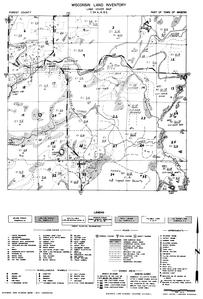
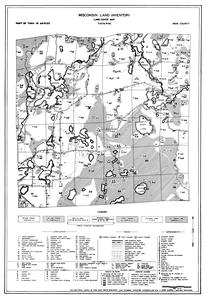
Often called the "Bordner Survey" after its director, John Bordner, the Wisconsin Land Economic Inventory was a
Depression-era project to inventory the land resources of Wisconsin so that they could be used more productively.
Field workers, usually trained foresters, tried to touch each "forty" in a county and map current land use and land
cover, signs of erosion, and size and quality of stands of timber. Included on the maps are such features as houses,
schools, churches, taverns, cheese factories, filling stations, and logging camps. Each map covers one survey township.
Milwaukee County was not mapped, and maps for Lincoln, Manitowoc, and Sheboygan counties were not published.
Land in Menominee County, established in 1961, is included as part of Langlade, Oconto, and Shawano Counties. Together,
these maps present a portrait of the Wisconsin landscape during the 1930s and 1940s.
For more information, see
Wisconsin Land Economic Inventory, Land Cover Maps.
NOTE: It may not be possible to print all parts of these maps directly through a browser; to print the maps,
save the image and use image-processing software or a word processor that accepts GIF and JPEG images, such as Microsoft
Word.
|